

The Flavors of Lucchese Summer: The Local Products We Love Most
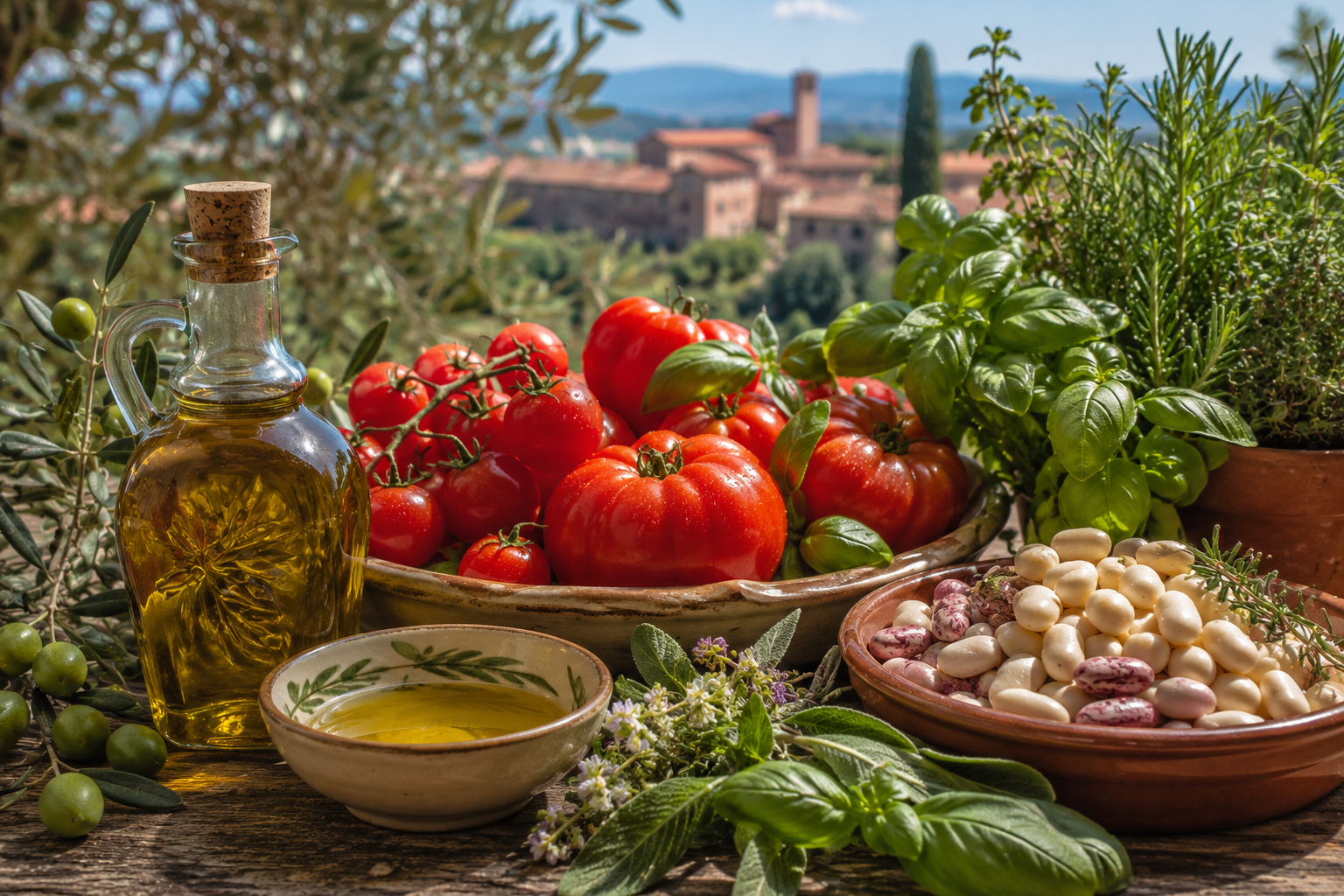
There's a moment in the year when Lucchesia truly shows itself at the table. It's summer, when the dry heat of the plain and the breezes coming down from the Apuan Alps transform the vegetable gardens into something extraordinary. The markets in the historic center fill with color, and the suppliers we've worked with for years bring us what the season has to offer. It's the time when Tuscan cuisine needs the fewest tricks — the ingredients speak for themselves.
"Cuore di bue" Tomatoes: Simple, Impossible to Improve
Anyone thinking of Tuscan summer cooking inevitably thinks of tomatoes. But not just any tomato: the Cuore di bue tomato from Lucchesia, meaty, almost seedless, with just a hint of acidity that makes it perfect both raw and cooked. On a slice of unsalted Tuscan bread, with a drizzle of extra virgin olive oil and a few basil leaves, it's already a complete dish. In the kitchen, we use it raw in seasonal salads and cooked in preparations that call for a firm, low-water pulp.
Garfagnana Farro: The Strength of the Mountains in Summer
It might sound like a winter ingredient, but Garfagnana farro — a Slow Food Presidium, grown in the mountains north of Lucca — transforms in summer. Served in a salad, warm or at room temperature, with seasonal vegetables and a light dressing, it becomes one of the most balanced dishes we can offer. It's a grain that satisfies without weighing you down, with centuries of history behind it and a flavor no substitute can replicate.
Extra Virgin Olive Oil from Lucchesia: When Quality Comes from the Land
The province of Lucca produces one of Italy's most distinctive extra virgin olive oils, made mainly from Frantoio, Leccino, and Moraiolo olives grown on the hills between the city and Versilia. In summer, with the high temperatures, the oil takes center stage: in pinzimonio, on bruschetta, as a dressing for legume or grain salads. It's one of those ingredients worth spending a little more on — because the difference is noticeable, and not a subtle one.
Sorana Beans: Small, Precious, Hard to Find
Just a few kilometers from Lucca, in the Pescia Valley, one of Italy's rarest and most prized legumes is grown: the Sorana bean, a Slow Food Presidium with an extremely limited annual yield. Its paper-thin skin makes it almost velvety on the palate; it cooks in very little water, without long soaking, and needs little else. Served cold in summer with oil and sage, it's a dish that outshines even the most elaborate preparations. We look for it every year, and every year we manage to bring a limited quantity to the table.
Aromatic Herbs: The Scent of Tuscan Summer
Rosemary, sage, thyme, marjoram — in summer they grow with an intensity the colder months don't allow. In Tuscany, they're not a decorative detail: they're structural to the dish. Grilled meat without fresh rosemary isn't the same. A boiled bean without sage is missing something. We work with a small producer in the Lucchese countryside who supplies us with fresh aromatic herbs — the difference compared to potted or dried herbs is obvious enough that it needs no explanation.
At the Table in Summer, at Miglio
These are the ingredients that guide our summer menu: local, seasonal products, selected with the same care that four generations of family history have taught us to bring to every choice. If you'd like to discover how we bring them together, we're waiting for you on Via del Moro — with or without a reservation, even just for a quick lunch under the portico.
Comments are closed.