

Tradition and innovation in the kitchen: Miglio50’s menu tells the story of four generations of Lucchese taste
In Lucca, in the heart of Corte San Lorenzo, Miglio restaurant transforms recipes rooted in memory into contemporary gastronomic experiences. A journey through a menu where past and present come together in every dish.
What does it really mean to innovate while respecting tradition? It is a question that anyone working in the restaurant world constantly asks themselves. Miglio’s answer, a restaurant in the historic center of Lucca, is written clearly in its menu: it is not about choosing between yesterday and tomorrow, but about allowing them to coexist in the same dish.
Lucchese tradition as a starting point
Sfogliando la carta, alcuni nomi saltano subito all’occhio. La rovellina lucchese, le costine con cavolo nero, i tordelli: sono piatti che parlano di una memoria gastronomica precisa, quella della Lucchesia e della Garfagnana. Non si tratta di folklore culinario fine a sé stesso, ma di ricette che portano con sé generazioni di sapere artigianale.
Take the Lucchese tordelli, for example. On the menu they are described as “classic handmade meat-filled tortelli served with a beef-only ragù and parmesan.” No extreme reinterpretation, no exotic ingredients: the choice is to preserve the authenticity of a dish that represents local identity. The meat filling, the patiently prepared ragù, the parmesan that brings everything together. It is the recipe that Lucchese families have passed down for centuries, executed with the care that only a professional kitchen can guarantee.
The same approach can be found in the zuppa alla frantoiana, offered in a vegan version. Here is a first example of how tradition and innovation can meet: a dish typical of the olive harvest season, born in the Tuscan countryside, is adapted to contemporary dietary needs without betraying its soul.
Innovation as respect for the diner
Miglio’s true innovation does not lie in adding trendy ingredients or spectacular techniques. Instead, it is rooted in an inclusive philosophy that clearly emerges from the structure of the menu. Most dishes are made without lactose. The tiramisù is prepared with homemade ladyfingers, gluten-free and lactose-free. These are not compromises, but conscious choices.
This attention reflects an important cultural shift: the gastronomic experience should be accessible. Those who suffer from intolerances or follow specific dietary regimens should not have to settle for limited options or give up the pleasure of taste. At Miglio, this belief is translated into dishes designed from the very beginning to be enjoyable for everyone.
Modern techniques in service of flavor
Reading the menu carefully, one notices references to contemporary cooking techniques that naturally coexist with classic preparations. The pork ribs are cooked at low temperature before being flavored with black cabbage and apple mustard. The croaker fillet follows the same principle: slow and controlled cooking, followed by a final searing.
Low-temperature cooking is not a whim of Michelin-starred chefs. It is a method that makes it possible to achieve results impossible with traditional techniques: more tender meats, more concentrated flavors, and precise textures. The fact that it is applied to local traditional dishes shows how innovation can be a tool for improvement, not for overturning tradition.
The dialogue between sea and land
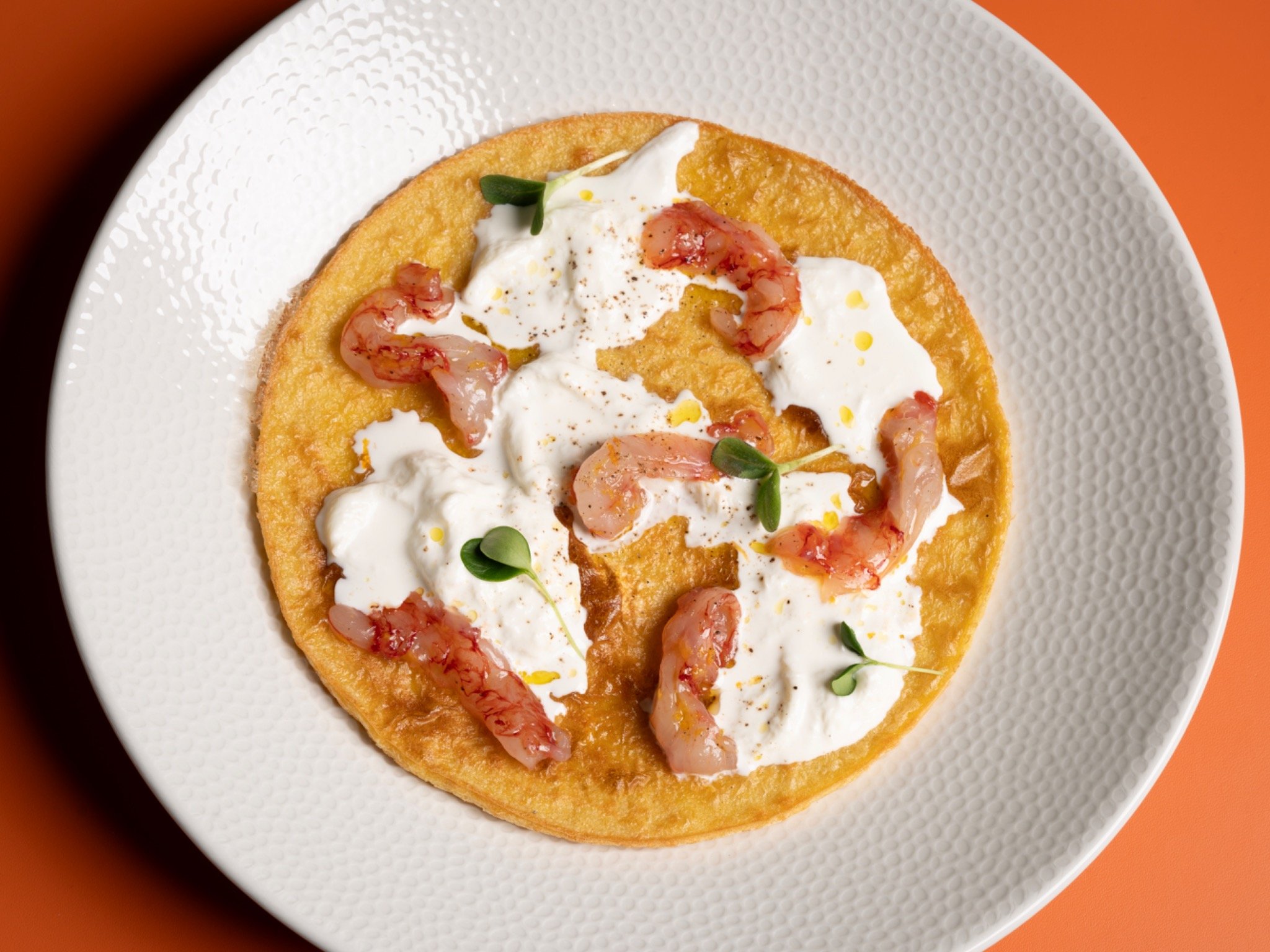
Miglio’s menu also tells the story of the territory through its ingredients. The baby octopus soup served with Garfagnana farinata brings together the catch of the Tyrrhenian Sea with the grains of the Lucchese mountains. Cecina, a traditional preparation from Livorno and Pisa, is paired with red prawns marinated in citrus fruits and burrata stracciatella.
These are combinations that on paper might seem bold, but that make perfect sense within the reality of the Tuscan territory. The Lucchesia is a borderland: hills and mountains on one side, the coast on the other. A cuisine worthy of respect cannot ignore this geographical complexity.
The risotto that looks to the East
There is one dish on the menu that perhaps represents the clearest example of conscious fusion: vialone nano risotto with curry, mussels, coconut, and homemade ponzu sauce. It is a preparation that requires at least two people, a detail that reveals its convivial nature.
Here, the Italian tradition of risotto meets the flavors of Asia. Curry, coconut, and ponzu sauce are ingredients foreign to Lucchese cuisine, yet they are integrated into a preparation that respects the fundamental rules of Italian risotto. The creaming process, the texture, and the cooking time all remain rooted in local technique. It is innovation that does not forget where it comes from.
Desserts: when memory becomes dessert
The chapter dedicated to desserts confirms the overall approach. The Buccellato Taddeucci flan is a clear tribute to the historic pastry tradition of Lucca. Buccellato, the symbolic dessert of the city, is transformed into a restaurant-style dessert without losing its connection to local tradition.
Alongside this explicit tribute, we find classics such as panna cotta and tiramisù, both reinterpreted with small variations (saffron for the former, freshly prepared to order for the latter) that make them unique without altering their essence.
Four generations in one dish
For more than seventy years, the Del Carlo-Giusti family has carried forward a clear philosophy: quality ingredients, respect for tradition, and attention to the customer. Edoardo Giusti, the fourth generation, has embraced this heritage and translated it into the language of contemporary dining.
The result is a menu that does not need programmatic statements: it speaks for itself. Every dish is the result of a carefully considered balance between what has always been done and what can be done today. Not innovation for the sake of surprise, but to serve better. Not tradition as a museum piece, but as a living root from which to grow.
In an era in which the restaurant world often swings between two extremes — nostalgic conservatism and experimentation for its own sake — Miglio50 offers a third path. A cuisine that knows where it comes from and is not afraid to go where it wants, carrying with it the best of both worlds.
Comments are closed.